

For crane owners and operators, maintaining unit performance goes beyond routine engine oil changes. One small component is often overlooked, yet it plays a critical role in the longevity and reliability of heavy equipment: the filter.
Many operators postpone filter replacement because it “still looks clean” or as a way to reduce operational costs. In reality, continuing to use a contaminated filter can lead to serious damage, with repair expenses far exceeding the cost of a single replacement filter.
What Is the Actual Function of Filters on Your Unit?
Before discussing why filters must be replaced regularly, it is important to understand that filters serve as the system’s primary line of defense. In general, their key functions include:
- Filtering Contaminants
Capturing dust, metal particles from friction, and dirt before they enter sensitive components. - Preventing Corrosion & Wear
Contaminants that pass through the system can act like “sandpaper,” causing premature wear on pistons and valves. - Maintaining Efficiency
Clean filters ensure smooth fluid circulation (oil/air), helping maintain stable engine and hydraulic temperatures while preventing overheating.
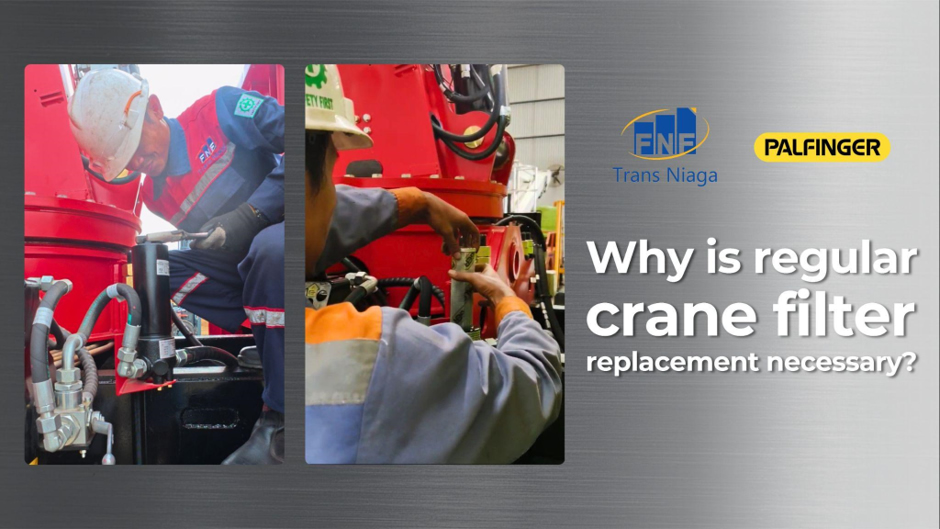
Replace Your Crane Filters Regularly
Routine filter replacement is an investment in preventing unexpected crane breakdowns during critical project operations. Do not allow microscopic particles to damage components worth hundreds of millions of rupiah. Always use genuine filters to ensure maximum protection, optimal performance, and long-term durability for your crane unit.
· Preventing Damage to Pumps and Precision Valves
Particularly on Sany Palfinger cranes, the hydraulic system is engineered with high precision. There are two filters that require special attention:
- High Pressure Filter
Located directly after the pump, this filter protects precision components such as control valves from even the smallest particles. If this filter becomes clogged, crane movements may become inaccurate or even completely jammed. - Return Filter
This filter captures contaminants as hydraulic oil returns from the system back to the tank. If neglected, contaminated oil will circulate within the tank and cause the hydraulic system to overheat more quickly.
· Preventing Dirty Oil Circulation (Bypass System)
Engine oil filters are equipped with an emergency bypass valve. When the filter becomes severely clogged and is not replaced promptly, this valve opens to maintain oil flow and prevent sudden engine shutdown. However, the consequence can be serious—unfiltered contaminated oil will circulate directly through the engine. Over time, this may cause extensive internal damage and could ultimately require a complete engine overhaul.
· Maintaining Power and Fuel Efficiency
A clogged filter forces the pump to work harder to circulate fluids such as oil or hydraulic fluid. This additional strain increases engine load, leading to higher fuel consumption while reducing overall operational efficiency and performance.
· Avoiding Costly Downtime
In a project, time directly impacts cost. Replacing filters requires only a short time during scheduled routine maintenance. Ignoring them, however, can result in hydraulic pump failure and significantly greater downtime due to prolonged repairs.
Filters Are a Small Investment for Major Protection
Do not take unnecessary risks with imitation components or delayed maintenance schedules. For maintenance consultations, periodic servicing, and genuine spare parts orders, feel free to contact us.
Contact FNF Trans Niaga today to ensure your unit remains in prime condition and is always ready to deliver maximum performance in the field.

