
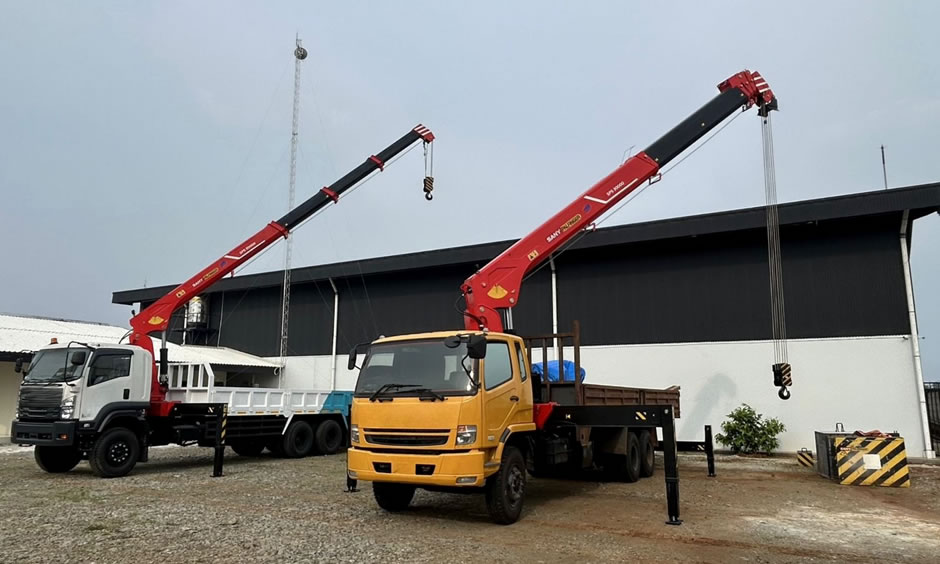
In daily operations, various types of crane failures are commonly encountered in the field and are part of the repair and maintenance work frequently handled by FNF Trans Niaga’s technical team. These issues typically develop gradually due to wear and tear, heavy workloads, or lack of routine maintenance.
Understanding the most common types of crane failures helps equipment owners take preventive measures before minor issues escalate into serious problems.
1. Hydraulic System Failures
The hydraulic system is the “heart” of crane performance. Any issue within this system directly affects lifting capacity and machine movement. Common problems include:
- Leaks in hydraulic seals and hoses
- Weak hydraulic pumps leading to insufficient pressure
- Stuck valves due to contamination or wear
- Slow, jerky, or unstable crane movements
If not addressed promptly, hydraulic issues can reduce lifting performance and pose serious safety risks.
2. Structural and Mechanical Damage
Structural and mechanical components bear the load directly. Damage in this area is often related to material fatigue, overloading, or aging. Common issues include:
- Cracks in the boom or main structure
- Worn pins and bushings affecting movement stability
- Wire rope damage, such as broken strands or deformation
- Outrigger system issues reducing operational stability
Structural damage should never be ignored, as it can lead to significant safety hazards.
3. Electrical and Control System Issues
Modern cranes rely on complex electrical and control systems to ensure precision and safety. When these systems fail, operations can be disrupted or even completely halted. Common issues include:
- Unresponsive remote control
- Faulty limit switch sensors
- Control panel malfunctions
- Short circuits or wiring system failures
Thorough inspection and accurate diagnostics are essential to avoid improper handling of electronic systems.
4. Braking System Problems
The braking system plays a critical role in maintaining control and operational safety. Failures in this system can significantly increase the risk of accidents. Common issues include:
- Ineffective braking in the slewing system (rotation)
- Problems in the hoisting brake system
Regular maintenance and testing are crucial to ensure the braking system remains in optimal condition.
The Importance of Early Detection and Handling
Each type of crane failure carries different levels of risk, but all require serious attention. Early detection through routine inspections, scheduled maintenance, and handling by experienced technicians helps prevent prolonged downtime and costly repairs.
With a proper understanding of these failure types, equipment owners can take proactive steps to maintain crane performance, safety, and service life.
Trust Your Crane Service to Professionals
Crane maintenance and repair require experienced technicians, proper tools, and strict adherence to safety standards. Professional service not only resolves existing issues but also ensures operational continuity, improves workplace safety, and maximizes your equipment investment.
Keep your crane in optimal condition, because safety and productivity start with well-maintained equipment. Don’t wait until minor issues escalate and disrupt your project progress.
???? Contact FNF Trans Niaga Service Hotline today
???? FREE consultation for inspection, maintenance, and repair
???? Schedule your service now to keep your equipment always readyFNF Trans Niaga — Your Professional Heavy Equipment Service & Maintenance Solution

